Why Branding Is the Most Underused Growth Lever in B2B Food & Beverage
In a sector built on relationships and product quality, brand is the asset most F&B companies leave on the table.
Branding for Food & Beverage Industry
4 min read
Walk into any serious B2B food and beverage conversation and you'll hear the same priorities: quality certifications, supply chain reliability, competitive pricing. Branding, if it comes up at all, sits near the bottom — something to sort once the fundamentals are in place.
It's an understandable hierarchy. But it's leaving commercial opportunity on the table.
The Buying Environment Has Changed
India's food and beverage market is undergoing structural transformation. Enterprise procurement has professionalised. QSR chains, hotel groups, and FMCG companies now run structured vendor evaluations — RFPs, compliance audits, capability reviews — before any conversation moves to pricing.
The procurement director evaluating six ingredient suppliers at once has never met most of them. She's researching from a screen. Your product quality and price still matter. But brand determines whether you get into the evaluation at all.
And for Indian F&B suppliers stepping into export markets — Europe, the Middle East, Southeast Asia — buyers have no existing relationship with you. Brand is the only thing building confidence before the first conversation.
"The product speaks for itself" doesn't work when the buyer hasn't decided to look at your product yet.
What Brand Actually Does in B2B F&B
Brand in this context isn't packaging design or Instagram content. It's the totality of impressions a procurement director forms about your company — before, during, and after any commercial interaction.
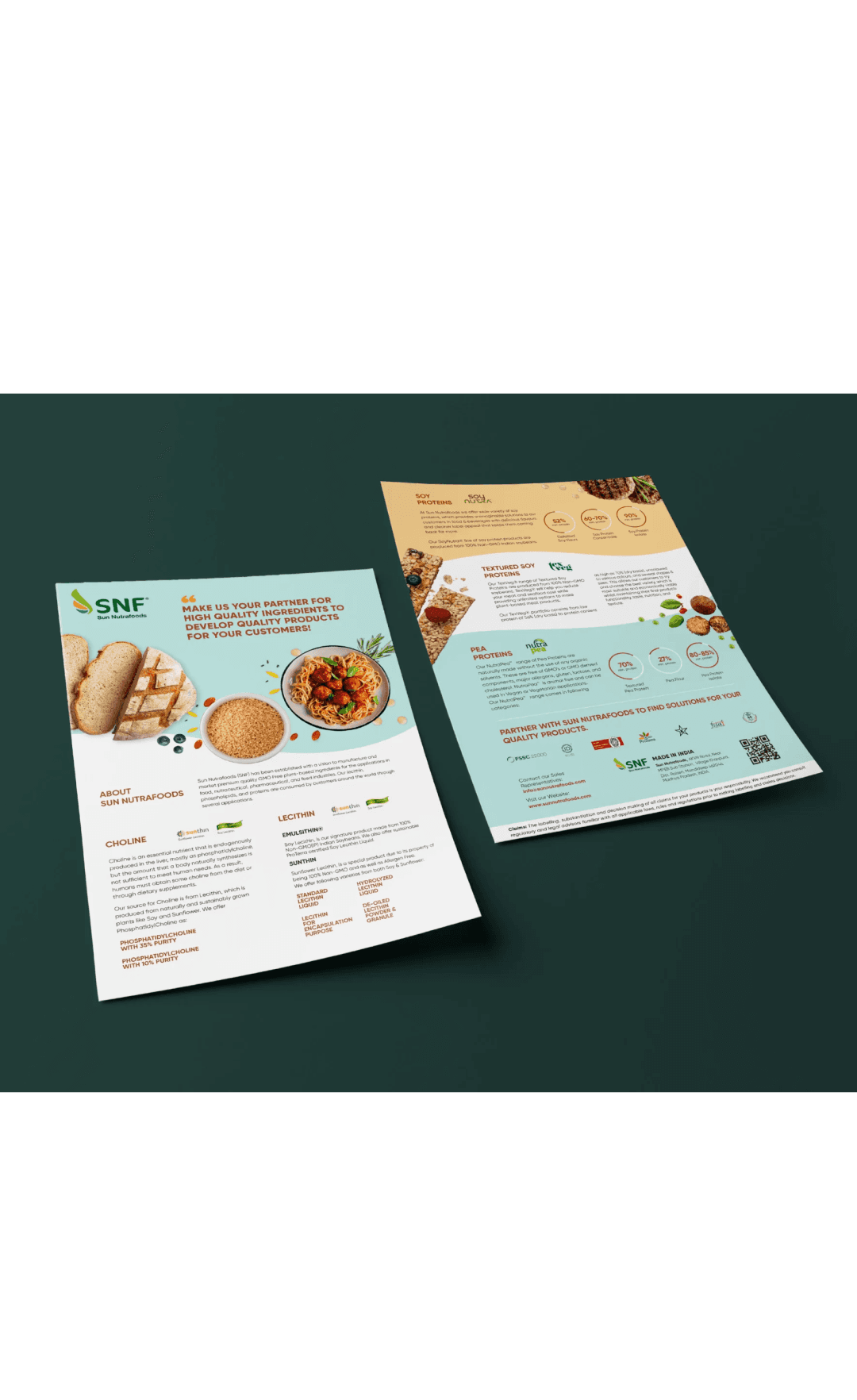
It affects shortlisting. A supplier whose website, deck, and collateral look professional and coherent gets on the list. One who doesn't raises questions before the conversation starts.
It affects price negotiations. Buyers negotiate harder when they're uncertain. Brand confidence — the feeling that you're working with a serious, well-organised supplier — reduces perceived risk and reduces the pressure to negotiate on price.
It affects distributor partnerships. Distributors make brand calls when they decide who to represent. A supplier with a coherent, professional identity is easier to sell and reflects better on the distributor's own positioning.
It affects export credibility. The perception challenge for Indian brands in international markets is real. A brand that communicates premium quality and operational rigour directly counters that assumption.
The Commodity Trap
The deepest consequence of weak branding in B2B F&B is commoditisation.
When your brand doesn't differentiate you — when your website, deck, and collateral look like every other supplier in the category — the only lever left is price. And price is a race to the bottom that benefits nobody except the buyer.
The companies breaking out of commodity pricing aren't just supplying better product. They're presenting like a premium business. That presentation builds the confidence that justifies the rate.
Where to Start
For most B2B F&B companies, the entry point isn't a full rebrand. It's an honest audit of what your brand currently communicates to a procurement director who's never met you.
Does your website communicate quality and credibility in 90 seconds? Does your capability deck look like it came from a company that applies the same standard to everything it does?
If the answer is uncertain — that's your brief.
The food and beverage companies winning institutional contracts, export accounts, and distributor partnerships in the next decade won't just have the best product.
They'll be the ones whose brand makes the right buyers confident enough to choose them.
We work with B2B food and beverage companies on brand strategy that drives commercial outcomes.