The B2B F&B Brand Playbook: How Food and Beverage Suppliers Win on Brand
A practical framework for F&B companies ready to stop competing on price.
Branding for Food & Beverage Industry
3 min read
Most B2B F&B branding advice is written for consumer brands. The buyers are different. The trust-building process is different. The framework needs to be different.
This playbook is for ingredient suppliers, food manufacturers, HoReCa suppliers, and contract processors selling into institutional, QSR, or FMCG procurement.
Start Here: What Your Brand Needs to Do
Consumer branding creates desire. B2B F&B branding creates confidence.
Your procurement buyer isn't looking to be inspired. She's looking to feel certain — that you'll deliver what you're promising, at the standard you're claiming, with the reliability her operation depends on.
Before touching design or messaging, define three things:
Category credibility. Do you look like you belong in this sector at this level? A premium ingredient supplier should look premium. An enterprise-grade processor should look enterprise-grade.
Operational standard. Does your brand signal a tight operation? Certifications, quality processes, compliance records — these need to be visible, not buried in a downloads folder.
Partnership orientation. Does your brand communicate a serious, long-term supplier relationship — or a transactional one?
The Five Touchpoints That Matter Most
Not all brand touchpoints carry equal weight. Prioritise in this order:
1. Website — rebuilt for procurement, not consumers. Your B2B buyer wants: clear capability overview, certifications prominent, evidence of institutional clients, and a frictionless way to request a sample. Design for the procurement director's evaluation process, not a retail shopper's browse.
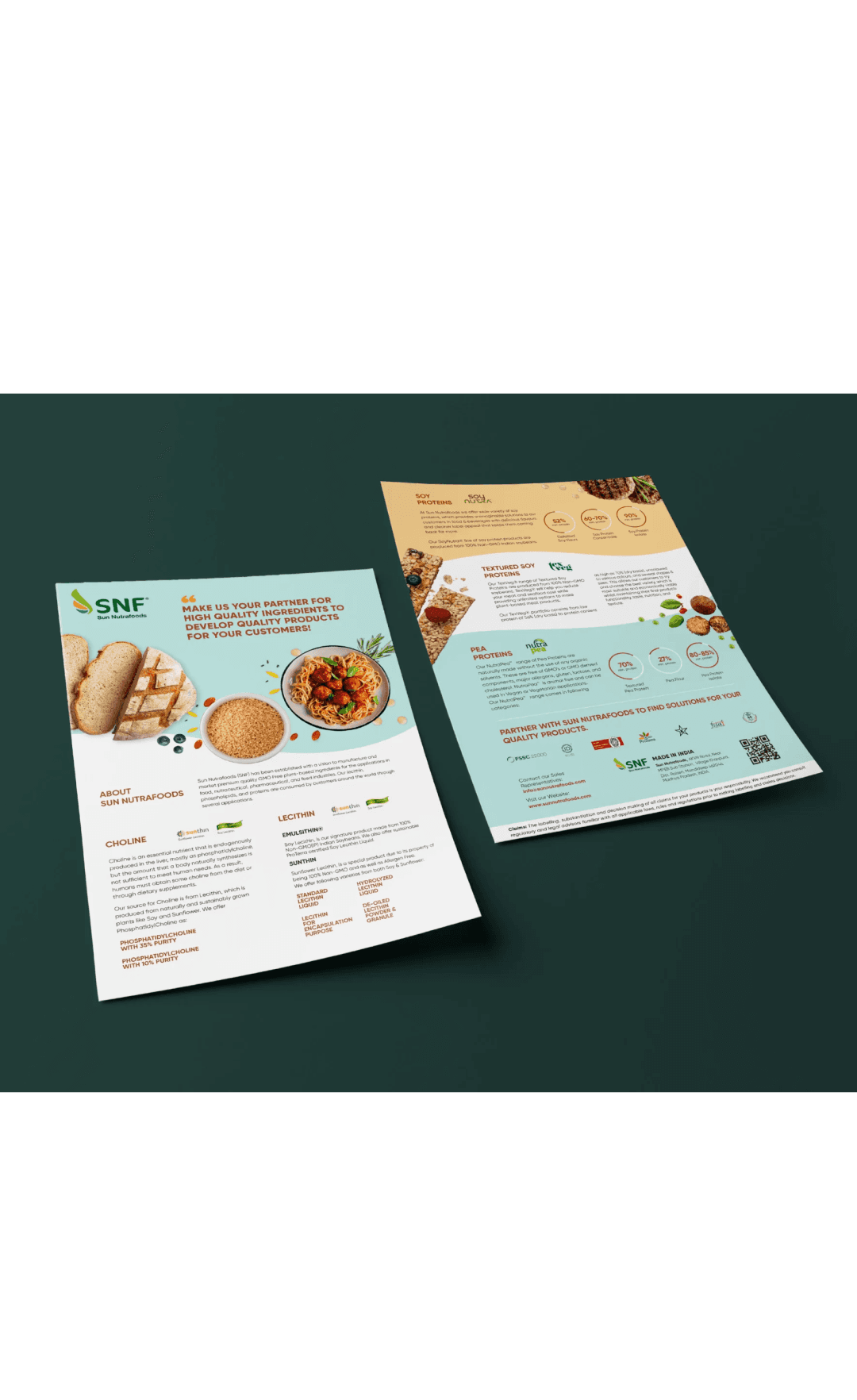
2. Capability deck — your most important sales asset. This is the first piece of work your buyer receives from you. A deck in an inconsistent, dated template signals poor attention to detail before your first meeting. Build it to the same standard as your product.
3. Certification and product documentation. Technical sheets, FSSAI certificates, traceability records. These are brand touchpoints. Well-organised and clearly designed, they communicate rigour. Scanned PDFs of photocopies create doubt at the moment of highest scrutiny.
4. Trade show presence. HoReCa expos, food ingredient shows, FMCG procurement events — for most B2B F&B companies, these are the highest-value brand moments of the year. The gap between companies who've invested in a coherent exhibition presence and those who haven't is immediately visible across the hall.
5. LinkedIn company page. Institutional buyers increasingly check LinkedIn as part of vendor evaluation. An active, professional page signals a growing business. A dormant one signals the opposite.
Build Your Story
The B2B F&B companies that break out of commodity pricing have a story their buyer can tell internally when justifying the vendor choice.
Your story should answer three questions:
Where does your product come from? Provenance matters to institutional buyers with sustainability commitments. Traceable sourcing is becoming a procurement requirement, not just a nice-to-have.
What standard do you hold yourself to? Certifications, third-party audits, and quality process detail become brand assets when they're made visible — not compliance obligations filed away.
Who have you served? Specific outcome statements — delivery reliability, volume consistency, client tenure — are the most persuasive brand content in B2B F&B. One well-documented case study outperforms ten generic testimonials.
The Payoff
A well-executed B2B F&B brand strategy produces three commercial outcomes, consistently.
Higher shortlist rate — you get into evaluations you'd otherwise be invisible in.
Better price tolerance — buyers who are confident in your brand negotiate less aggressively.
Faster, stickier relationships — institutional buyers who've been impressed by your brand before the first meeting convert faster and retain longer.
The product is the foundation. The brand is what makes the right buyers confident enough to choose it.
Ready to build a B2B F&B brand that opens institutional doors? Talk to us →