The Mind Mapping Playbook: Why Every Brand Starts as a Web of Ideas
Design Decoded
6 min read
Before a brand gets a logo, it gets a mess.
A glorious, sprawling, non-linear mess of words, associations, memories, contradictions, and possibilities. And that mess — when handled intentionally — is one of the most powerful tools in the brand-building process.
That tool is called a mind map.
What Is a Mind Map, Exactly?
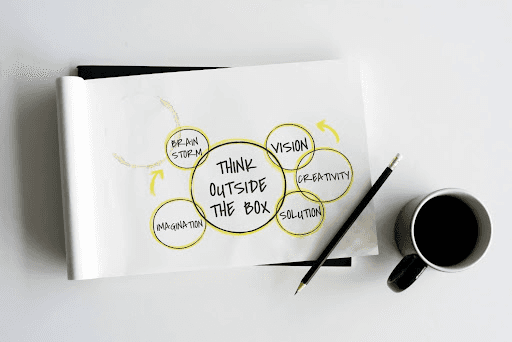
A mind map is a visual thinking tool. You place a central idea in the middle of a blank page — your brand, your product, your founder's name — and then let your thoughts radiate outward like branches from a tree. Each branch represents a related idea. Each sub-branch digs deeper.
Unlike a list, which forces linear thinking, a mind map mirrors how the brain actually works: by making connections, jumping between ideas, and finding relationships that logic alone wouldn't uncover.
The concept was popularised by British author Tony Buzan in the 1970s, but the practice of thinking visually and associatively goes far, far older. Architects sketched it in the margins of blueprints. Scientists mapped theories before proving them. Now, brand designers use it to excavate the soul of a business before a single pixel is placed.
Why Mind Mapping Belongs in Your Brand Playbook
Here's what most people get wrong about branding: they think it starts with visuals. It doesn't.
Branding starts with understanding — of the business, the audience, the values, the competitors, the aspirations, and the gaps between all of these. Mind mapping is how that understanding gets out of someone's head and onto a surface where it can be examined, questioned, and built upon.
Let's break down exactly where mind mapping earns its place.
Play 1: Clarifying Brand Identity
When to use it: At the very beginning. Before strategy documents. Before briefs.
Start with the brand name in the centre. Then ask — and branch outward from — these questions:
What does this brand do?
What does it believe in?
Who is it for?
What does it sound like? Feel like? Smell like, if it had a scent?
What would it never say?
If it were a person, who would it be?
There are no wrong answers here. This is not the time for polish — it's the time for honesty. Some of the most defining brand insights come from the branches that surprise you: the word that shows up three times without being planned, the value that feels uncomfortable to say out loud but rings completely true.
Mind mapping makes the invisible, visible.
Play 2: Unearthing Brand Personality
When to use it: When you need to define tone, voice, and visual direction.
A brand personality is far more nuanced than a list of adjectives. It's a living, breathing character — and mind mapping is how you find it.
Take a word like "warmth" and branch it: What does warmth look like? What colours does it evoke? What brands already own it — and how are you different? What happens when warmth meets confidence? When does warmth become weakness?
This exercise does two critical things. It prevents generic positioning ("we're friendly and professional" — so is everyone) and it helps creative teams build a vocabulary around the brand before they start designing. That vocabulary becomes the brief.
Play 3: Competitive Landscape Mapping
When to use it: During research and strategy phases.
Place your category in the centre. Branch out into every competitor, then map each one: their positioning, their visual language, their audience, their gaps. Where are they clustering? Where is the white space?
This kind of mind map isn't just research — it's a strategic compass. It shows you what territory is overcrowded and where genuine differentiation lives. In a market as competitive as India's, where new brands are launching every week, this step is the difference between being heard and being noise.
Play 4: Naming and Messaging Exploration
When to use it: When generating brand names, taglines, or campaign territories.
Mind mapping is possibly the most underrated tool for naming a brand. Start with the core emotion or promise the brand needs to convey. Branch into associated words, metaphors, languages, sounds, and feelings. Don't edit — generate. A session with fifty branches might yield two usable directions, and that's more than enough.
The same applies to messaging. What is the brand trying to say? What are all the ways it could say it? A mind map lets you hold multiple messaging territories at once and choose the one that feels most true, not just most convenient.
Play 5: Visual Direction and Moodboarding
When to use it: Before beginning any visual identity work.
Visual identity is often built on instinct masquerading as intuition. Mind mapping makes that instinct legible.
Branch outward from the brand into visual territories: textures, typographic moods, colour families, reference worlds (think: 1970s Bombay cinema vs Scandinavian minimalism vs hand-painted Indian signage). This creates a shared language between the designer and the client — a crucial step that prevents the dreaded "I'll know it when I see it" feedback loop.
When everyone can point to a visual direction in a map, the entire creative process becomes more focused, more collaborative, and more efficient.
The Deeper Reason Mind Mapping Matters
There's a reason mind maps feel good to make. They externalise what's in your head into something you can see, walk around, argue with, and refine. In a discipline as subjective as branding, that ability to make thinking physical is invaluable.
But perhaps the most important thing a mind map does is this: it slows you down long enough to ask the right questions.
Most brand problems aren't design problems. They're thinking problems. A brand that feels "off" usually has an identity that was never properly excavated — values that were assumed rather than examined, a personality that was borrowed rather than built.
Mind mapping is the antidote to that. It's not glamorous. It's not the part of the process that ends up in a case study. But it's the part that makes everything else possible.
How to Mind Map for Your Brand: A Quick-Start Guide
You don't need special software to do this (though tools like Miro, FigJam, or even Notability work well). A large sheet of paper and a pen will do.
Here's how to begin:
Step 1. Write your brand name or central theme in the middle of a blank page. Circle it.
Step 2. Set a timer for 10 minutes. No editing, no deleting — just branching. Write every word, association, and idea that comes to mind.
Step 3. Look for patterns. What words appear more than once? What unexpected connections emerged? Which branch feels most alive?
Step 4. Choose 2–3 dominant branches and go deeper. These will likely form the core of your brand thinking.
Step 5. Share it with your team or your designer. Use it as the starting point — not the destination.
A Final Thought
A brand is, at its heart, a system of meaning. And meaning doesn't start with a logo — it starts with a question, followed by another question, followed by a web of associations that slowly starts to reveal who this brand really is.
Mind mapping is how you ask those questions and hold the answers all at once.
Start messy. Build deliberately. That's the playbook.
At Studio Manasi Doshi, mind mapping is one of the first tools we reach for when beginning a new brand identity project. It keeps our thinking honest, our process collaborative, and our outcomes rooted in something real. If you'd like to explore what that process looks like for your brand, let's talk.