A Short History of Brand Marks: From Ancient Symbols to Digital Logos
Design Decoded
5 mins read
Every logo we recognise today - from the swoosh on a trainer to the emblem on a phone - carries a history much older than most people imagine. And the deeper you dive into this history, the more fascinating it becomes. Brand marks weren’t born in glossy studios or brainstorm sessions. They began as quiet human attempts to say: “This is mine. I made this. You can trust it.”
That simple intention sparked one of the most enduring visual languages in civilization.
1. Where It All Began: Marks in Mud, Stone, and Fire
The origin of branding goes back nearly four millennia. Picture a potter in ancient Mesopotamia: hands dusty with clay, placing a small carved seal onto a vessel fresh from the wheel. That single impression wasn’t decoration. It was authorship, accountability, and pride.
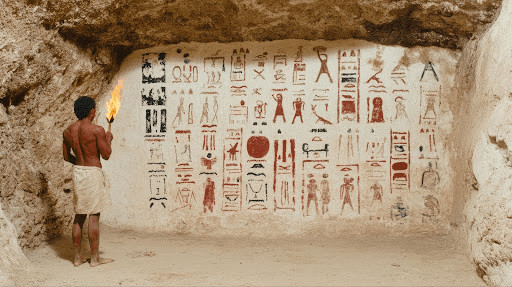
Across the world, Egyptian builders left chisel marks on blocks of limestone. Pastoral communities branded their cattle with symbols that represented families or regions. These early markings were functional, but they also carried emotional weight. They created identity in societies where literacy was rare.
What’s remarkable is that even then, the logic was the same as today’s history of logos:
A symbol should speak for you even when you’re not there.
2. Craftsmanship and Reputation: The Middle Ages
Fast-forward to medieval Europe. Workshops were bustling, guilds were powerful, and a maker’s reputation was a matter of survival. Artisans began engraving their signatures, emblems, and monograms onto swords, pottery, cloth, and ornamental metal.
These marks weren’t just identifiers; they became assurances of quality. A sword with a particular smith’s insignia could travel across borders and still command trust. This is where branding steps firmly into its role as a contract between maker and consumer - a pivotal moment in the branding timeline.
3. The Industrial Revolution: When Logos Became Household Names
The world changed dramatically in the 18th and 19th centuries. Mass production introduced abundance - and confusion. Shelves were suddenly full of competing products. Companies needed to stand out.
Enter trademarks, packaging labels, wordmarks, and the earliest attempts at consistent visual identity.
A few milestones worth noting:
Bass Ale (1876) - the first ever registered trademark, a simple red triangle that still feels modern
Coca-Cola (1886) - a hand-drawn Spencerian script that became one of the most recognisable logotypes in history
Levi’s Two Horse Mark — a storytelling logo long before storytelling became a buzzword
This era marks the beginning of logo evolution into a strategic business asset, rather than a mere decorative stamp.
4. The 20th Century: Design Takes the Lead
If the Industrial Revolution was about visibility, the 20th century was about intentionality. Logos became cleaner, smarter, more conceptual. Design movements shaped them profoundly.
The Bauhaus Movement
Its influence was monumental. The Bauhaus insisted that design should be functional, honest, and accessible. That philosophy transformed corporate identities for decades.
Swiss Style
Then came the designers of Switzerland, who gifted us with grid systems, modularity, and the pursuit of clarity. Their visual discipline became the backbone of brand identity worldwide.
The Corporate Identity Age
By the mid-century, pioneers like Paul Rand, Saul Bass, and Massimo Vignelli were crafting entire visual ecosystems - not just logos but typography, colour systems, grids, behaviours, and applications.
This was the era that cemented the idea that a logo isn’t simply seen.
It’s experienced. It must work, every single time, in every single place.
The modern brand era was born.
5. The Digital Age: Logos Learn to Move, Shrink, and Adapt
Then came the internet. And everything changed again.
Suddenly a logo needed to fit a billboard and a tiny circular avatar. It needed to animate on screen, respond to different devices, and load instantly. This shift birthed:
responsive logos
minimalist marks designed for scalability
animated logos
generative and variable identities
Social media accelerated the trend towards simplicity. A logo had to be recognisable even at the size of a fingertip.
We’re now in the most dynamic phase of logo evolution — one where a brand mark is no longer static at all. It’s a living asset.
6. Looking Ahead: What Logos Might Become
As AI, AR, and motion design become mainstream, the next wave of brand marks may:
adapt to user behaviour
change mood or colour with context
become interactive
exist simultaneously as sound, motion, and form
Yet despite all this futuristic potential, the core purpose remains surprisingly unchanged from our potter in Mesopotamia:
A logo is a promise. A bridge of trust. A symbol that represents human effort and identity.
Understanding where logos come from — the full sweep of the history of logos and the wider branding timeline — helps us design marks that aren’t just trendy, but timeless.