Luxury has always had a colour.
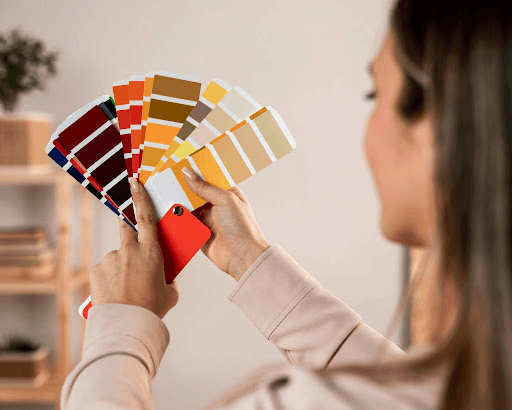
Before a customer reads a tagline, before they touch the product, before they know the price - they see the colour. And in that fraction of a second, a decision is already being made. Is this for me? Does this feel right? Does this feel expensive?
Colour is the fastest language a brand speaks. And in luxury branding, fluency in that language is the difference between a brand that commands desire and one that merely looks the part.
What's fascinating about this moment in luxury design is how much the language is shifting. The rules that held for decades- black for authority, gold for opulence, ivory for refinement- are still present, but they're being spoken with a new accent. Quieter. More complex. More considered.
Here's what's happening, and more importantly, why it works.
The Old Grammar of Luxury Colour
Before we look at where things are going, it's worth understanding why certain colours became synonymous with luxury in the first place.
Colour psychology in luxury has always worked through association. Deep, rich colours- onyx black, midnight navy, burgundy, emerald- signal depth and complexity. They feel considered, never accidental. Metallics (gold, platinum, rose gold) connect to precious materials, to craft, to things that are made rather than manufactured. Quiet neutrals- ivory, champagne, warm cream- create space, breathing room, the visual equivalent of unhurried confidence.
Together, these form what you might call the classical luxury palette: restrained, authoritative, deliberate. Chanel's near-black with cream. Hermès's warm orange with gold. Tiffany's singular, trademarked blue with white.
These aren't arbitrary choices. They're the result of decades of association-building, repeated so consistently across every touchpoint that the colour itself is the brand. You see a particular deep navy with gold accents and you think prestige before you think anything else.
That grammar still holds. But the vocabulary is expanding.
Trend 1: The Rise of Quiet Luxury- Colour as Restraint
Perhaps the most significant shift in luxury colour is the move away from obvious signals toward invisible ones.
Quiet luxury- the aesthetic built on understatement, quality, and the confidence of not needing to announce itself- has transformed how premium brands use colour. The palette is warm, muted, and deeply neutral: soft camel, warm taupe, oat, bone, sand. Nothing loud. Nothing that shouts.
It works because it operates on an entirely different register of luxury. Loud luxury says: look at me. Quiet luxury says: if you know, you know.
This distinction is crucial for brand positioning. A brand using quiet luxury palettes is not trying to attract everyone- it's trying to attract exactly the right person. The one who reads restraint as sophistication, not blandness. The one who would find a flashier palette exhausting.
Brands like Loro Piana, The Row, and Bottega Veneta have built entire identities around this principle. Their colour palettes are almost aggressively understated- and that's precisely why they feel so expensive.
The design implication: If your luxury brand is reaching for premium positioning through quality rather than visibility, your palette should whisper, not shout. Warmth over brightness. Depth over saturation. Space over fullness.
Trend 2: Earthy Richness- Grounded Elegance
Brown, for most of its history, was considered the least glamorous of the neutrals. Too common. Too casual.
Not anymore.
From rich chocolate to warm cinnamon, chestnut to terracotta, the brown family has become one of the most sophisticated colour territories in luxury branding right now. Hermès, the house that perfected warm orange as a brand signature, has leaned further into earthy terracottas and burnished reds. Fendi Casa pairs warm beiges with sumptuous textured accents. Pantone's Mocha Mousse- a rich, coffee-inflected brown- became one of the most discussed colours of 2025 precisely because it captured something luxury consumers were already feeling: a hunger for warmth, for the natural, for the handmade.
This trend is driven by something deeper than aesthetics. Luxury consumers- particularly younger ones- are increasingly drawn to brands that feel rooted. Earth tones signal materiality: soil, wood, stone, leather, clay. They evoke craft and provenance. They feel honest in a way that highly processed, synthetic colours do not.
There's also an anti-tech quality to this palette. In a world saturated with digital-blue screens and neon interfaces, brown tones feel almost rebellious in their warmth.
The design implication: If your brand story involves craft, heritage, natural materials, or sustainability- earth tones are your most authentic palette choice. They're not a trend you're chasing; they're a value you're expressing.
Trend 3: Jewel Tones- Depth as Drama
Not all luxury wants to whisper.
Jewel tones- deep emerald, sapphire blue, amethyst, oxblood, plum- are having a significant moment in luxury branding, and for good reason. They carry the depth and richness of classical luxury palettes but with more personality. More colour, but still entirely controlled.
Emerald green in particular has become one of the defining colours of premium wellness and eco-luxury- brands that want to signal prestige while being rooted in nature and vitality. Deep plum and burgundy are appearing across luxury hospitality, fine dining, and fragrance- colours that feel both regal and intimate, like the interior of a members' club or the lining of a jewellery box.
What makes jewel tones work in luxury branding is their relationship to precious materials. Emerald is a gem. Sapphire is a gem. When a brand uses these colours with restraint- as an anchor paired with soft neutrals- the association is immediate and visceral. This is not trying to look valuable. It is the visual language of value.
The design implication: Jewel tones work best when anchored- one dominant jewel tone, supported by cream, ivory, or warm white. The moment you introduce two jewel tones together, you lose the singularity that makes them powerful.
Trend 4: Black and Gold, Evolved
Black and gold has always been the most legible shorthand for luxury. It's the combination found everywhere from Chanel to Rolex, from Dom Pérignon to high-end hospitality.
What's changing is not the combination, but the execution. The 2026 interpretation of black and gold- sometimes called Clubroom Contrast- is less about shimmering excess and more about a matte-meets-metallic tension. Deep inky black (not quite #000000, but close) paired with gold accents that are used precisely rather than liberally. One gold line. One gold detail. Not a gold flood.
This evolution reflects a broader luxury principle: restraint makes the accent more meaningful. A brand that uses gold everywhere has made gold ordinary. A brand that uses gold in exactly one place has made it precious.
The design implication: If you're working with the black-and-gold palette, the question is never how much gold- it's where. The answer should be: one deliberate, unavoidable place.
Trend 5: Warm Metallics Replacing Cool Ones
For several years, cool-toned metallics- silver, chrome, platinum- dominated premium tech and fashion. They felt modern, digital, precise.
The shift now is toward warmth. Rose gold, champagne, antique gold, burnished brass. These metallics have a human quality that cool silver does not. They feel touched rather than manufactured. They're imperfect in a way that reads as artisanal.
This is particularly relevant for luxury brands entering or expanding in Indian markets, where warm gold tones carry deeply embedded cultural associations with celebration, auspiciousness, and quality. A warm champagne-and-ivory palette communicates luxury in Mumbai differently- and more resonantly- than a platinum-and-silver combination that might work in Tokyo.
Colour in luxury branding is never culture-neutral. The brands that understand this build deeper trust with their audiences.
The design implication: Consider the cultural context of your metallic choices as carefully as you consider their visual one. Warmth is increasingly winning- and in certain markets, it's not a trend, it's a truth.
What All of This Points To: The New Luxury Colour Philosophy
Looking across all of these trends, a consistent philosophy emerges- and it's one that serious luxury brands have always known, even if the market is only now catching up.
Luxury colour is never about impact. It's about resonance.
Impact is what a bright, saturated, attention-grabbing colour achieves. Resonance is what a deeply considered, precisely chosen colour builds over time. Impact fades. Resonance compounds.
The most enduring luxury palettes- the ones we still associate with prestige decades after they were chosen- are built on three principles:
Restraint: Never more than three or four active colours. Usually fewer.
Depth over brightness: Muted, complex, layered tones outperform flat, saturated ones. A colour that changes slightly in different lighting is a colour worth choosing.
Intent: Every colour choice should be defensible with a reason. Not "it looks nice"- but "it signals exactly what we want to signal to exactly the person we want to reach."
A Note for Brands Being Built Right Now
If you're building a premium or luxury brand- whether in fashion, wellness, hospitality, food, or professional services- the colour conversation is not cosmetic. It's strategic.
Your palette is communicating before your copy, before your campaign, before your product description. It's the first claim you make about who you are and what you're worth.
The good news is that the current landscape of luxury colour is rich with possibility. Whether you're drawn to the earthy warmth of a sustainability-rooted brand, the quiet authority of a neutral palette, or the gemstone depth of a jewel-toned identity- there is a luxury palette that can be authentically yours.
The question worth asking is not what colours are on-trend?
It's what colours are true to us, and how do we use them with enough restraint to let them mean something?
That's the question great luxury branding starts with.
At Studio Manasi Doshi, colour strategy is a core part of every brand identity we build- not a final step, but a foundational one. If you're defining or refining a premium brand and want to think through your visual identity from the ground up, let's talk.