India has always been a country that loves food. What is changing now is the scale at which we are turning that love into business.
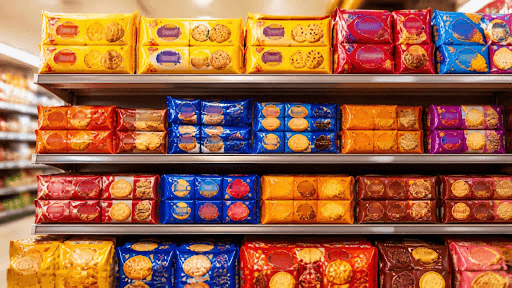
Walk into almost any modern supermarket today and the transformation is visible. Shelves that once had a handful of familiar names now carry an assortment of snacks, beverages, sauces, ready-to-eat meals, health foods and regional specialties. Online, the choices are even more overwhelming. A new food or beverage brand seems to appear every few days, often born in a home kitchen, a restaurant or a founder’s personal frustration with what was available in the market.
The restaurant business is going through its own version of this transformation. Cafés, QSRs, cloud kitchens and speciality restaurants are expanding beyond the neighbourhood model. Food delivery and quick commerce have made it possible for a consumer in Mumbai to discover a brand from Bengaluru, Delhi or Jaipur and have it arrive at the doorstep almost immediately.
The opportunity is enormous.
India’s food services market is expected to grow significantly over the next few years, with the organized segment expanding faster than the unorganized market. Food processing, too, has grown steadily, supported by changing consumption patterns, urbanisation, rising incomes and greater access to distribution.
For entrepreneurs, this sounds like an invitation. But there is another side to the story.
It is becoming increasingly easy to start a food business. It is becoming increasingly difficult to build a food brand.
That distinction matters.
The barriers to entry have fallen considerably. A founder can develop a product, find a manufacturer, create packaging, put up a website and start selling online without having to build a traditional distribution network first. Social media can provide the first customers. Quick commerce can provide visibility. Food delivery can provide reach. But access to the market is not the same thing as having a place in the market.
The real challenge begins when everyone has access to the same channels.
Suddenly, a good product is competing with dozens of other good products. A premium snack is sitting next to five other premium snacks. A healthy beverage is making the same promises as every other healthy beverage. Every other package seems to be talking about clean ingredients, authenticity, quality, craftsmanship or tradition.
The words are different. The message often isn't. This is where many promising food businesses begin to lose their way.
Founders tend to know their product intimately. They know where the ingredients come from. They know why a particular recipe was chosen. They know how many months were spent getting the formulation right. They know the story behind the business.
The consumer, however, does not have the same amount of time. They see a package on a shelf for a few seconds. They scroll past an Instagram post. They search for something on a quick-commerce app. They make a decision.
The question is not whether the product has a story. Almost every product does. The question is whether the brand has given the consumer a reason to remember that story. This is where branding is often misunderstood.
Branding is still treated by many businesses as a cosmetic exercise: a logo, some colours, attractive packaging, perhaps a social media template. Something to be done once the product itself is ready.
But for a food business trying to grow, branding has a much larger job. It has to create recognition. It has to create distinction.
And, eventually, it has to create preference.
Recognition is relatively easy to understand. Remove the logo from the package and ask whether someone who already knows the brand would still recognize it. Is there something distinctive about the colour, typography, photography, illustration, shape or overall visual language?
Then comes the harder question. Put that package beside ten competitors. Why would someone choose it?
Not why should they choose it according to the founder. Not because the ingredients are better. Not because it is premium, natural or authentic.
Why this one? That question becomes increasingly important as India's food market becomes more crowded.
Because the next stage of growth will not simply be about getting products onto more shelves. It will be about earning space in people's minds.
And that is considerably harder.
There is also a practical problem that comes with growth. Many brands are designed for the business they are today, rather than the business they want to become.
A brand begins with one product. Then comes another flavour. Another format. A new category. A larger pack. A smaller pack. A restaurant. A quick-commerce listing. A new city.
With every addition, the original identity gets stretched.
This is when a business discovers whether it actually has a brand or simply has a collection of branded materials.
A strong brand should be able to grow without becoming unrecognizable.
That does not mean every product needs to look identical. Quite the opposite. It means there is a recognizable idea holding the system together.
This may be one of the more important challenges facing India's F&B industry over the next decade.
We have become very good at making products. We are getting better at distributing them. We are becoming better at marketing them. But we are still learning how to build brands that can last. And longevity matters.
Trends can create a launch. Discounts can create trial. Algorithms can create visibility. A great product can create a first purchase.
A brand is what gives someone a reason to come back. It is what makes a new product feel familiar. It is what allows a business to enter a new category without starting from zero. It is what makes a consumer say, "I've seen this before. I know this brand."
India's food and beverage story is no longer about whether there is enough demand.
There is. It is not even about whether there are enough entrepreneurs willing to build businesses. There are plenty.
The more interesting question is whether these businesses can move from being products people discover to brands people choose. That will require better food, certainly. Better operations. Better economics. Better distribution.
But it will also require better thinking about branding.
Because in a market where everyone is trying to be noticed, being recognizable is an advantage. Being distinctive is an even bigger one.
And perhaps the next big food brands in India will not be the ones that shout the loudest.
They will be the ones that people can spot, remember and choose - even when the logo is nowhere in sight.
Interested to know more?