What I Thought Branding Was When I Started vs. What I Know Now
From Founder’s Desk
5 min read
When I was in college, I thought branding was beautiful.
Moodboards. Logos. Colours. Typography. References that somehow came together and made you feel like, yes, this is it.
I loved that part of design.
I still do.
But at the time, I thought that was branding.
When I started working, my understanding didn't change much. As a designer, the job seemed to be quite straightforward: make it look good and make the senior happy.
You learnt to present well. You learnt to understand what people liked. You learnt which directions were likely to get approved.
And somewhere in all of that, I started associating good design with approval.
If the logo looked good and everyone in the room liked it, I had done my job.
It took working with clients to slowly realize how incomplete that idea was.
A client doesn't hire you for a pretty logo.
They hire you because they want something to change.
Sometimes they know exactly what they want.
Sometimes they don't.
Sometimes they have already decided what the logo should look like, what color it should be and what their competitor is doing.
And sometimes, thankfully, they come in with a problem instead of a solution.
Those are usually the projects I find most interesting.
Because when someone is open to perspective, the process becomes exploratory. You can ask questions. You can challenge assumptions. You can look at the business, the category, the customer and the competition before deciding what the brand should look like.
I've also learnt that clients don't necessarily care whether a designer thinks a particular shade of blue is beautiful.
They care about whether the work is going to move the needle for them.
And honestly, that was an important lesson for me.
Because art can be subjective.
Business decisions can't always be.
Somewhere along the way, I stopped asking, “Does it look good?”
I started asking, “Does it work?”
It sounds like a small difference.
It isn't.
I think about branding a little like this:
If I'm painting a picture for an auction, the painting has one job. It needs to stand on its own. It needs to be beautiful enough for someone to stop, look at it and hopefully want to own it.
Branding isn't that.
Branding is much closer to giving birth to something that has to live.
And live for a long time.
The logo I design today might end up on a website tomorrow, on packaging six months later, on a billboard two years later and on a completely new product five years after that.
The business will change.
The people working there will change.
The customers will change.
The market will change.
The brand has to be able to live through all of it.
That is when I began to understand that creating a brand isn't about creating one beautiful picture.
It's about creating something that can keep making sense long after the designer has left the room.
I think I climbed into strategy almost without realizing it.
There wasn't a single moment when I decided, I'm going to become a brand strategist now.
It happened gradually.
I started asking more questions.
Why are we choosing this color?
Why does this brand need to look this way?
Who are we actually trying to speak to?
What does this business want to become?
What is the category saying already?
What makes this brand different?
And perhaps most importantly: what is the business problem we're actually trying to solve?
The more I asked, the harder it became to jump straight into design.
The logo couldn't be the first answer anymore.
It had to be one answer within a much bigger system.
That, for me, was the shift.
I started seeing branding less as a visual exercise and more as a series of decisions rooted in the business.
Today, I see branding very differently.
I still care about typography.
I still spend far too much time looking at colors.
I still get excited when a visual system comes together beautifully.
That part of me hasn't gone anywhere.
But now I want to know why.
Why this typeface?
Why this tone?
Why this packaging structure?
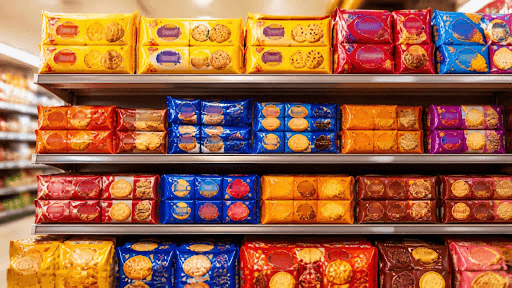
Why should this brand look different from everything else on the shelf?
Why should someone remember it?
And what happens when the business grows?
For me, branding today is about making strategic design decisions that can build something with longevity.
Not just something that looks right today.
Something that can become recognizable tomorrow.
Something that can evolve without losing itself.
Something that eventually becomes bigger than the people who started it.
A legacy, in its own small way.
And I'm still learning.
I think that's the part of branding that keeps me interested.
If branding were only about design, I probably would have figured it out by now.
But it's really about people.
And people keep changing.
The way consumers discover brands changes. The way they make decisions changes. What they trust changes. What catches their attention changes. What feels familiar changes.
Consumer psychology isn't static.
Neither is culture.
Neither are businesses.
So after all these years, I'm still learning how people respond to brands and why some things stay with them while others disappear almost immediately.
Maybe that's also why I've become less interested in creating something that is simply beautiful.
Beautiful is a good starting point.
But it's not enough.
I want to understand the business behind it.
I want to understand the person buying it.
I want to understand the category it has to compete in.
And then I want to create something that has a reason to exist.
When I look back at the designer I was in college, I don't think she was wrong.
She just had a much smaller picture.
She saw the logo.
I now see everything that has to happen around it.
And perhaps that's the biggest thing I've learnt:
Branding isn't about making a picture for an auction.
It's about creating something that gets to live.